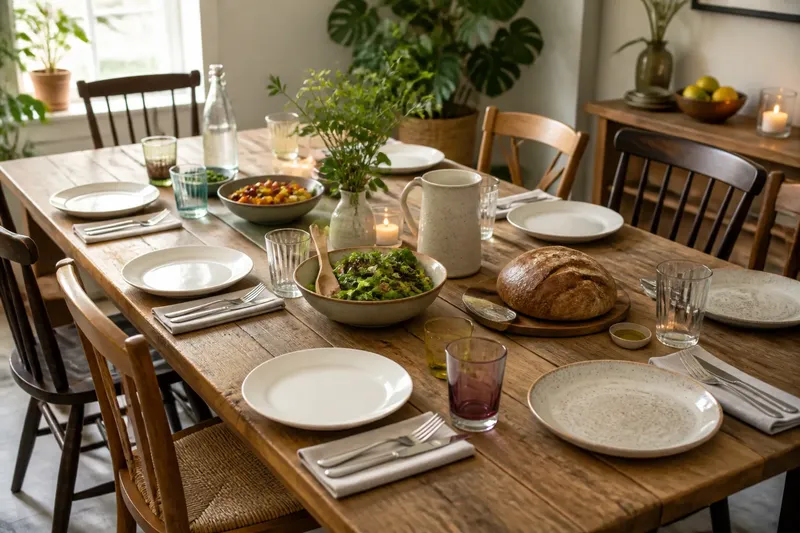
The Place Card Before the Printed Menu
Learn how a place card and printed menu serve different roles, welcome guests without clutter, and help your table feel clear before the meal begins.
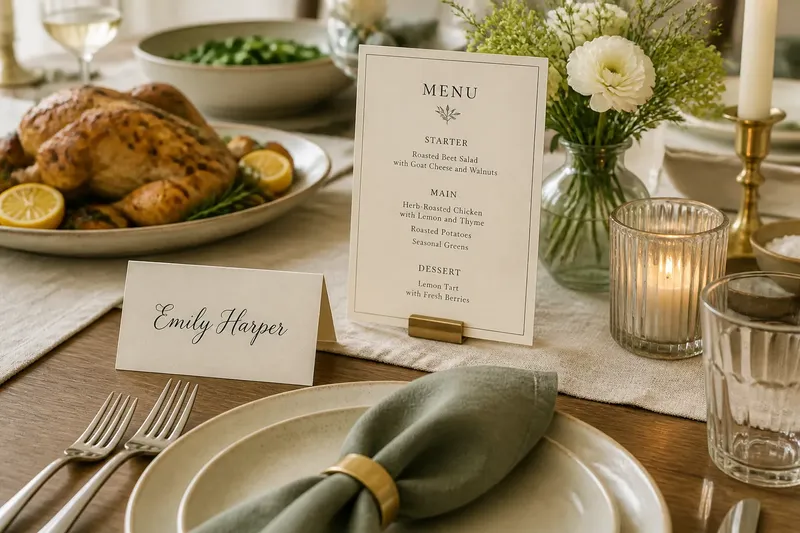
A place card before the printed menu gives guests a clear welcome without making the table explain everything at once. At a dinner party, the name card can mark a guest’s place; the menu can describe the meal. Keeping those jobs distinct makes the start of dinner feel calmer and more personal.
Two kinds of welcome
A place card speaks to one person. It says, in effect, “We made room for you here.” A printed menu speaks to everyone who needs to know what is coming, from the first course to dessert. One is a small gesture of arrival; the other is a guide to the meal.
You may want both, only one, or neither. Assigned seats call for a place card. A menu earns its space when guests would benefit from seeing the courses or choices. For a casual supper with dishes served family-style, a spoken welcome may do more than either piece of paper.
Keep the table legible
Give the name enough space to be read at a glance. A folded card in dark ink on pale card stock is often easier to read than ornate lettering on a patterned background. Write the name the guest uses, and add a last name when people might confuse two guests with the same first name.
Keep meal details on the menu. If guests need ingredient or course information, put it there rather than squeezing it under a name. For allergies or other private dietary needs, speak discreetly with the guest and coordinate with whoever is serving. A public card is not the place for sensitive details.
Imagine you are hosting a small birthday dinner with assigned seats, a shared roast, and a guest who has told you privately about a food allergy. You write each person’s name on a folded card and place one menu at the center with the dishes listed. You confirm the guest’s meal privately with the person cooking, rather than marking the card. The result is a table that shows everyone where to gather while keeping personal information out of view.
Choose what the meal needs
Use paper when you want a simple card that is easy to write, move, or replace. A tent card can stand beside a plate; a flat card can rest above the setting if there is room. Wood or slate can suit a reusable setting, but check that the name remains easy to read in the actual room light and that the object is comfortable to move.
A menu can sit at each setting or in a shared spot, such as the center of the table. Individual menus help when guests need to read choices privately or easily. One shared menu may feel less cluttered for a small meal with a short list of dishes. Let the amount of useful information—not a desire to match every card—decide.
If guests are choosing their own seats, skip individual place cards or make the open seating clear. A name beside a chair suggests that the seat is reserved, even if that was not your intention.
Check before guests arrive
- Check each name against your guest list; if it is spelled correctly, set the card out, and if not, rewrite it before guests arrive.
- Check whether two guests share a first name; if they do, add last names, and if they do not, keep the card uncluttered.
- Check the card from where a guest will approach; if the name is visible, leave it there, and if a flower or candle hides it, move the card or the decoration.
- Check whether each place card matches an assigned seat; if seats are assigned, keep the cards, and if guests may choose freely, remove them or clearly explain the open seating.
- Check whether guests need course or choice information; if they do, provide a printed menu, and if they do not, leave menus off the table.
- Check whether a menu or card crowds the plate, glass, or serving space; if it does, move it to a shared spot or use a smaller format, and if the setting remains comfortable, keep the arrangement.
- Check whether any dietary detail is visible to other guests; if it is, remove it from the public card and confirm the plan privately, and if no private detail appears, leave the card as written.
Questions about cards?
Should a place card include a title?
Usually, a name is enough. Add a title only when the formality of the gathering calls for it and you know the guest prefers that form of address.
Can a place card double as a favor?
Yes, if the name remains easy to spot and the favor does not crowd the setting. A small wrapped gift with a name tag can do both jobs without asking guests to move it to find their place.
Do I need a menu for a family-style dinner?
Not necessarily. If everyone can see and share the dishes and there are no choices guests need to review, a menu may add little; include one if course or ingredient details would help.
What if plans change after the cards are set?
Keep a blank card and pen nearby, then update the name quietly if someone’s seat changes. Leave the menu alone unless the meal itself has changed.
A place card before the printed menu works best when it welcomes a person without competing with the meal. Check the table from the doorway once more: guests should be able to find the information they need, while the rest of the setting stays easy to use.