A Rainy Afternoon Open House, Planned Around Coats
Rainy afternoon open house coat storage keeps wet layers organized, gives guests a clear place to pause, and helps arrivals move past the doorway with ease.
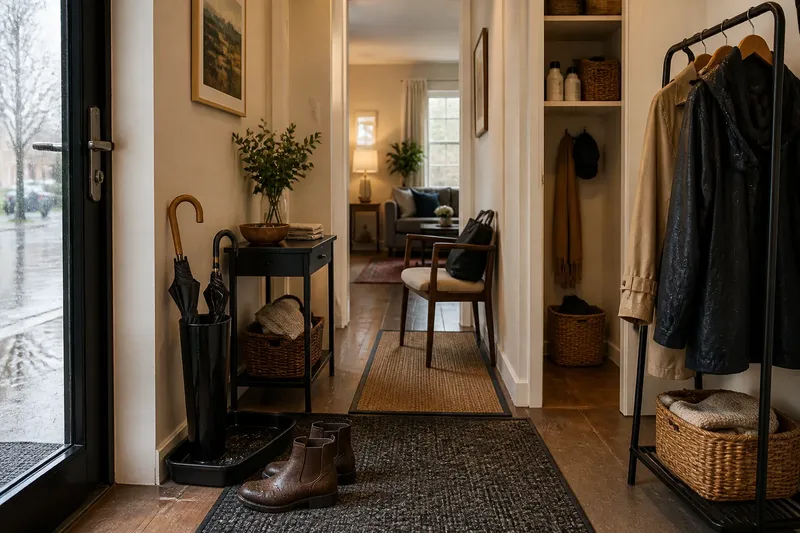
Rainy afternoon open house coat storage works best when every wet item has a clear destination before the first guest arrives. A boot tray, a few reachable hangers, and an open path can keep a narrow entry from turning into a bottleneck.
Map the entry route
Say you are hosting an invented open house on a rainy afternoon in a small apartment. Guests may arrive at different times, and the front door opens into a narrow hall. A coat closet also holds household supplies, while the living room is the place to linger.
Start by tracing the route from the door to the living room. Move spare shoes, packages, and decorative pieces out of that path. Then choose separate spots for coats, wet items, and a brief pause so guests do not have to decide where to go while standing in the doorway.
In this invented setup, the host clears one section of the closet and places a basket nearby for hats and gloves. A few sturdy hangers stay within reach. A freestanding rack goes farther down the hall, outside the door’s swing, for guests who would rather not use the closet.
Give wet items a landing
Rain can drip from umbrellas, scarf ends, and bag bottoms. Put a boot tray or umbrella stand near the entrance, but not in the walking line. A washable mat can hold shoes, provided it stays flat and does not create a trip hazard.
A small side table can hold a bowl for keys and a stack of clean cloths. Keep it focused on arrival items rather than turning it into a place for mail or serving dishes. Leave enough room beside the tray and rack for someone to set down belongings without crowding another guest.
In another home, a covered porch or mudroom corner may work better. Choose a surface that can handle moisture and keep it away from food and upholstered seating. Check care labels and product instructions for mats, textiles, and furniture; follow local building rules where they apply.
Which coat storage fits?
Where should wet umbrellas go?
Set out a stable boot tray or umbrella stand near the entrance, clear of the door’s swing. Keep it away from food and upholstered seating so drips stay contained.
What if the coat closet is full?
Use a freestanding rack or sturdy hook rail only where it will not narrow a hallway or block an exit. Add a basket for smaller accessories and a tray for umbrellas or wet footwear.
Should guests keep coats with them?
Offer a choice when space allows: a cleared closet section, a rack, or a place to keep a light layer nearby. A visible option lets guests decide without the host taking every coat unasked.
How can a small entry stay passable?
Move spare shoes and packages out of the route, then place coat and umbrella destinations to one side. Leave a direct path from the door toward the gathering space.
Make room for a pause
A guest may need a moment to manage a wet boot or settle a bag. In the invented apartment, the host places a small chair near the entry but away from the door, then keeps it clear for sitting rather than using it as a coat pile.
A simple note on the nearby table—“Coats in the closet or on the rack”—makes the options easy to spot without interrupting conversation. The route onward to the living room stays open, with a lamp or drink station helping guests recognize where to go next.
Imagine one guest arriving with a dripping umbrella and a tote. They place the umbrella in the tray, hang the coat on the rack, rest the tote on the chair briefly, then follow the open path to the living room. The expected result is a clear doorway and fewer belongings left in the walking route.
Keep departures clear
Guests may need to retrieve coats while others are still arriving. Keep the rack accessible and leave space around the closet opening instead of storing extra chairs or serving supplies there.
Keep the basket for gloves beside the coats and the key bowl separate from the food or drink station. That way, small belongings have an obvious place to return to, and the route to the door remains visible. Leave the umbrella tray in position to catch drips as people head out.
Check the arrangement
- Observe whether the door opens fully; if a rack or tray sits in its swing, move it farther down the hall, or use a different location.
- Observe whether the route from the door to the gathering room is clear; if shoes or packages narrow it, relocate them, or choose a different path.
- Observe whether the closet has a usable section; if hangers fit without crowding supplies, offer it, or set out a freestanding rack.
- Observe whether the rack narrows the hall; if guests must turn sideways to pass, move it, or offer closet storage instead.
- Observe whether the umbrella tray catches drips without blocking the walking line; if it does, keep it there, or move it beside a wall near the entrance.
- Observe whether the chair remains available for a brief pause; if it becomes a pile of coats, clear it, or remove the chair and keep the route open.
For your rainy afternoon open house, check the door swing, the path to the gathering room, and the places where damp belongings can rest. Rainy afternoon open house coat storage is most useful when the options are easy to see and do not obstruct anyone arriving or leaving.