Seating Cards or Open Choice? Two Table Setups Compared
Compare assigned seating, open choice, and hybrid table layouts to help guests settle in comfortably and make conversation without awkward seat negotiations.

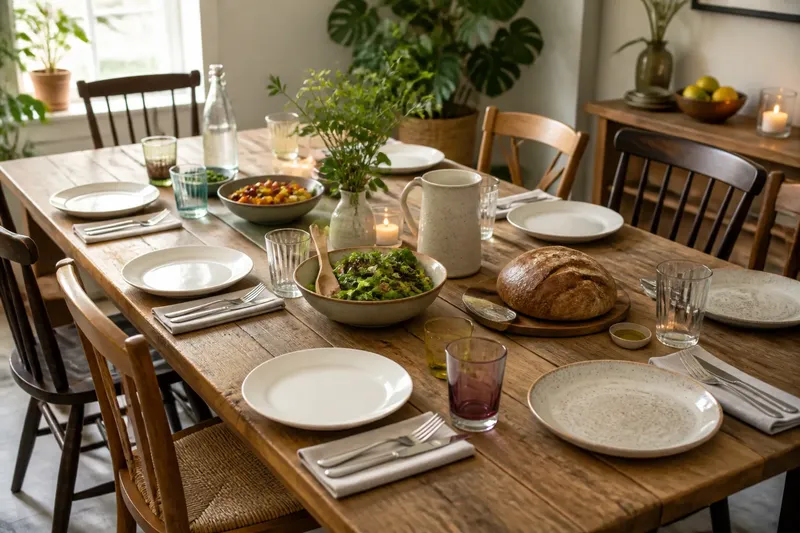
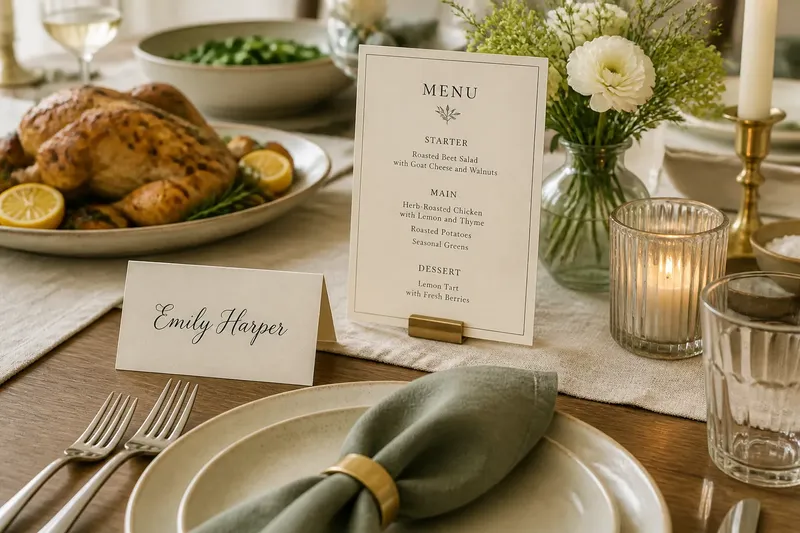
Seating cards or open choice shape how guests move around a table, not just where they sit. Assigned seating helps you organize the group before anyone arrives; open choice lets the group sort itself out. Choose based on the room, the meal, and how much movement your setup allows.
Control and movement
Assigned seating gives the host a fixed arrangement to work with. You can leave a serving path clear, keep a table balanced, or make sure a particular chair stays available. Its main value is practical coordination, especially when guests will remain at the table for most of the meal.
Open choice changes the table from a fixed layout into a flexible one. Guests can sit together, move to another eating area, or join a conversation elsewhere. That flexibility works best when the gathering includes more than one place to eat or when people will naturally come and go.
The choice is less about whether a card feels formal and more about what the room needs to do. A long dinner with shared platters has different demands from a casual meal where guests carry plates between the kitchen and patio.
Serving and circulation
Look at the table as a working surface. Shared bowls, pitchers, and serving platters need reachable spots. Chairs need room to pull back, and guests should be able to get to the kitchen or a nearby room without crossing through a tight cluster.
A fixed seating plan can help you leave a clear route and keep serving dishes within reach. Open choice may make that harder if everyone gathers at one end or chooses seats that block the path. If guests can move to other spaces, leave the table set up for easy turnover rather than treating each chair as a permanent place.
Do a quick walk-through with the serving dishes in place. If a platter would block a guest’s view or make another seat difficult to reach, change the layout before guests arrive. When someone has a specific access need, ask privately what arrangement would work and plan around their answer.
Choose a layout?
Does a long table favor assigned seating?
It can, because a fixed arrangement helps spread guests along the table and preserve access to serving dishes. If the group is relaxed and comfortable choosing, open seating can still work; keep the center clear and let guests know they may use other seating too.
When does open choice work well?
Open choice suits a meal where guests can carry food between spaces or arrive and leave at different times. Put out enough usable chairs and make the available eating areas obvious, so guests do not have to guess where they can sit.
Can assigned and open seating be combined?
Yes. You might reserve a few places for practical reasons and leave the rest unassigned, or assign the dining table while offering extra chairs in a nearby room. Make the arrangement clear in a brief welcome rather than asking guests to interpret a complicated system.
What if the arrangement blocks a route?
Move a chair or serving dish before the meal begins, and check the route again with the table in use. If a guest needs a specific path or seat, ask what works for them and adjust without requiring a public explanation.
A worked layout
Imagine you plan a dinner for eight, using one dining table and two chairs in the adjoining living room. Your starting arrangement has eight dining chairs, a large shared platter in the middle, and a narrow route to the kitchen. You decide to assign six places at the dining table and leave two places open in the living room. You then move the platter to a sideboard, check that chairs can be pulled back, and keep the kitchen route clear. The result is a defined dining area for most guests, with a nearby alternative if someone wants more space or a quieter conversation. The tradeoff is that the host must explain where the extra seats are and make sure food can reach those guests.
Layout decision points
- Serving dishes: If shared platters occupy the center, place them where seated guests can reach them; if that blocks sightlines or access, move them to a sideboard and let guests serve themselves.
- Clear routes: If chairs or bags narrow the way to the kitchen, move the furniture or choose a different serving path; if the route stays clear, keep the layout.
- Multiple eating areas: If guests can eat in a nearby room or outdoors, leave those seats available; if the meal depends on shared dishes at one table, organize that table first.
- Arrival pattern: If guests will arrive at different times, leave some seats flexible; if everyone is expected to sit together, settle the layout before arrival.
- Access needs: If a guest requests a particular chair or route, ask what adjustment helps and make it; if there is no request, still check that each chair is reachable.
- Room use: If guests will move between the table and another space, keep a natural path open; if they will stay seated, prioritize comfortable access to dishes and companions.
For seating cards or open choice, judge the setup by its practical effect: can guests reach food, move through the room, and choose a comfortable place without disrupting the meal? Check the route and serving surface once more after setting the table. A small adjustment before the doorbell rings can keep the room workable throughout dinner.