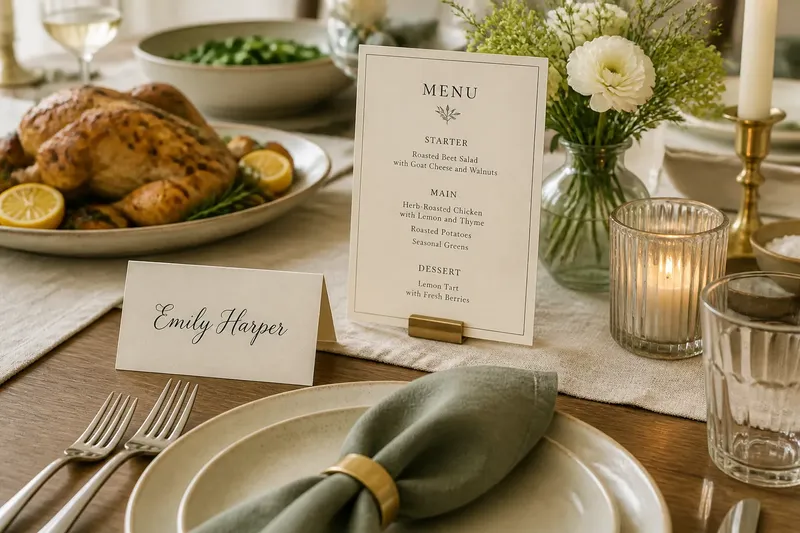
The One-Perfect-Table Myth
A usable shared-meal table does not need matching dishes. Arrange plates, glasses and serving pieces so guests can find their places and pass food easily.
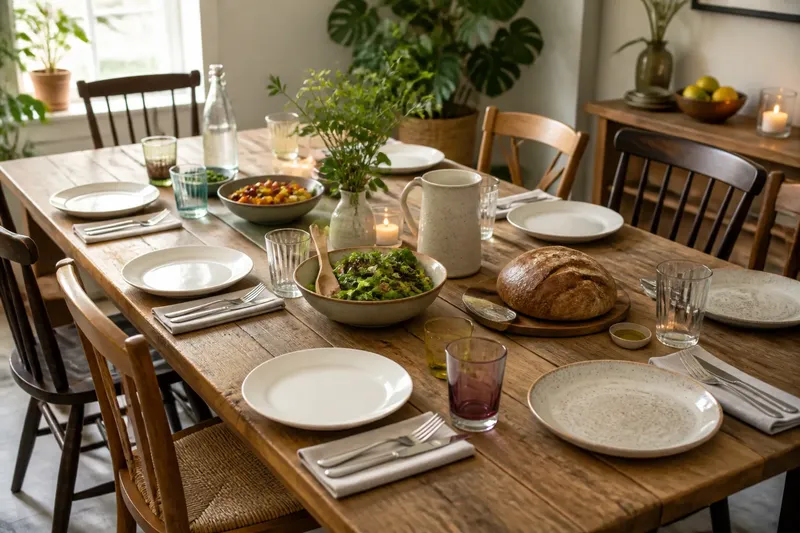
A usable shared-meal table does not need matching dishes. The best place settings make it clear where guests sit, what they can use and how to pass the food. When a table feels awkward, check how it works before changing its style.
Start with the meal
Before you set out napkins, picture the meal itself. Will guests serve themselves from bowls in the middle, or will you bring plates from the kitchen? Will people share a loaf, pour drinks or set a phone beside a plate? Those ordinary actions determine what the table needs more than a matching color scheme does.
Begin with the things guests will use: dinner plates, cutlery, drinking glasses and serving dishes. Add napkins if you want them. Consider decoration only after the working space is clear. Mixed stoneware and plain tumblers can look deliberate when everyone can identify the useful pieces at a glance.
Say you have a narrow dining table, white plates and several mismatched glasses. Put a plate at each seat, keep each glass in the same general spot, and leave the center open for serving bowls. Guests can read the layout easily, and the glasses’ differences become a detail rather than an obstacle.
Make room for serving
A centerpiece causes trouble when it occupies space the meal needs. Tall flowers can block sightlines. Several candles, vases and ornaments can leave no obvious landing place for a casserole. The issue is not that a table should be bare; guests need to see one another and use the middle.
Reserve space for the dishes people will share, then remove or relocate decorations that compete with it. A low fruit bowl, a short vase or a few small candleholders may be easier to live around than a sprawling arrangement. If food comes from the kitchen, a more noticeable object can sit in the center before the meal, as long as it is easy to move.
Check sightlines from a seated position. If a guest would need to lean around a branch to talk across the table, trim the arrangement, use a lower vessel or move it to a sideboard. A modest centerpiece is also easier to shift when a serving dish needs a place.
Give each seat space
Guests notice when plates, elbows or chairs compete for room. Crowding can come from oversized dinnerware, extra decorations or seats pressed against a wall. It can also appear when the plan accounts for place settings but not the serving bowls and water jug.
Remove unnecessary layers before borrowing or buying anything. If chargers, folded menus or extra cutlery are not needed, leave them out. Move serving dishes to a nearby counter if that works for the meal, and keep only the items guests will reach for on the table.
Then pull out each chair as a guest would. Notice whether it catches a rug, bumps another chair or presses against a wall. Shift the table or nearby furniture if possible. If the room cannot accommodate every detail, prioritize a comfortable seat and accessible place setting.
Make mixed pieces legible
Uneven does not always mean unusable. Borrowed chairs and mixed dishes can still feel considered. Trouble starts when differences make the arrangement hard to interpret: one guest has a glass and cutlery while another has no clear place, or serving spoons are scattered among personal items.
Use repeated placement cues. Put plates in the same relationship to the chairs, keep drinking glasses in a consistent spot, and place each serving spoon with its dish. The plates do not need to match; the pattern of use should be easy to follow.
If several sets of tableware are in play, group them with intention rather than disguising every difference. You might use one style of plate for everyone and mix the glassware, or keep colored bowls together at one end for a shared dish. One repeated element gives the eye a place to rest without requiring every object to coordinate.
Keep shared food within reach
A tidy table can still frustrate guests if the bread, water or serving spoon is hard to reach. This often happens when a centerpiece takes the most accessible spot or a large dish leaves no clear path for passing food. Guests may hesitate to stretch across someone else’s plate, especially when they have just met.
Place shared items where guests can lift and pass them without crossing a place setting. Turn handles toward the person most likely to lift a dish, and avoid stacking small items so one is difficult to take. If the table is long, duplicate essentials at both ends only if there is room.
Make the serving pattern clear. A bowl meant to travel can sit near the center with its serving utensil. A dish meant to stay put can go somewhere guests can reach comfortably. If people will serve themselves in a line, use a counter instead of asking the table to function as both buffet and dining surface.
Keep place settings clear
Unmatched objects are rarely the real problem; unclear signals are. A guest may not know whether a small plate is for bread, which glass is theirs or where to put a used utensil if several pieces are crowded together. A table needs enough order to help without turning dinner into a lesson in formal place settings.
Keep the everyday arrangement simple. Put the dinner plate in front of each chair, set cutlery beside it in the order guests are likely to use it, and place the drinking glass within easy reach. If a special item has a specific purpose, make that clear through its position or mention it when inviting people to sit. Skip decorations that could be mistaken for food or serving equipment.
For a casual meal, one fork and one knife may be enough. If guests need a spoon for soup or dessert, add it where it will be used instead of laying out extra utensils to fill space. Aim for a setting people understand at a glance, not a display of everything in the drawer.
What should you fix first?
Should every plate match?
No. Matching plates can create a calm visual rhythm, but clean, usable plates matter more than identical ones. If the mix looks busy, repeat a simple element, such as napkins or glass placement.
How high should a centerpiece be?
Choose an arrangement that lets seated guests see one another without leaning or peering around it. A low vessel is a sensible choice when the table is small or conversation across the table matters.
Where should shared dishes go?
Set them where guests can reach and pass them without crossing another person’s place. If there is not enough room, serve from a nearby counter or bring dishes to the table in manageable groups.
What if I lack matching pieces?
Use the clean, serviceable pieces you have and repeat a simple placement pattern. Let the differences show rather than spending the gathering trying to make every setting identical.
A clear order of fixes
When a table seems wrong, resist the urge to replace the whole arrangement. Work through these checks in order:
- Clear the working space. Check whether guests need each object during the meal. If an item has no use, move it off the table; if it serves the meal, keep it within reach.
- Check every seat. Look for a plate, cutlery and a reachable drinking glass at each place. If one is missing or awkwardly placed, reposition it; if all are easy to find, leave the settings as they are.
- Test the center. Check whether shared dishes have a clear place. If decorations crowd that space, move them aside; if the dishes fit, keep the centerpiece modest and easy to shift.
- Follow the reach. Check whether guests can reach water, bread and serving utensils without stretching across another place. If they cannot, move the items or serve from a nearby counter; if they can, keep the arrangement.
- Check chair movement. Pull out each chair and look for contact with a rug, wall or neighboring chair. If it catches or bumps, shift the furniture or remove an obstruction; if it moves freely, keep the layout.
- Reduce visual noise. Check whether different pieces make the layout hard to read. If they do, repeat one placement cue, such as glass position; if the settings are already clear, keep the mix rather than adding matching accessories.
- Finish with decoration. Check whether an accent blocks conversation or serving space. If it does, lower or relocate it; if it does not, keep it as a finishing touch.
Imagine you have a small table, four clean plates, mixed glasses, a serving bowl, a water pitcher and a tall vase. First, put a plate, fork and glass at each chair; the settings now have a repeated pattern. Next, place the serving bowl and pitcher in the center, where they crowd the vase. Move the vase to a sideboard, then pull out each chair and check that it moves freely. The resulting decision is to keep the mixed glasses and simple settings, with the vase off the table: guests have a clear place, shared food is accessible, and the decoration no longer competes with the meal.
Let the table move
Once guests begin eating, the table will change. A serving spoon moves, napkins unfold and the bread basket shifts toward someone who wants another piece. That is not a styling failure; it is evidence that people are using the table. Leave enough flexibility for the arrangement to adapt instead of expecting it to stay frozen.
Judge the table by what guests can do at it: find their place, see one another, reach the food and set down a glass. If those actions are easy, your shared-meal table is doing its job. A final useful check is to walk through the serving route before guests sit: if you cannot carry a dish in without moving a place setting, adjust the layout while the room is still quiet.